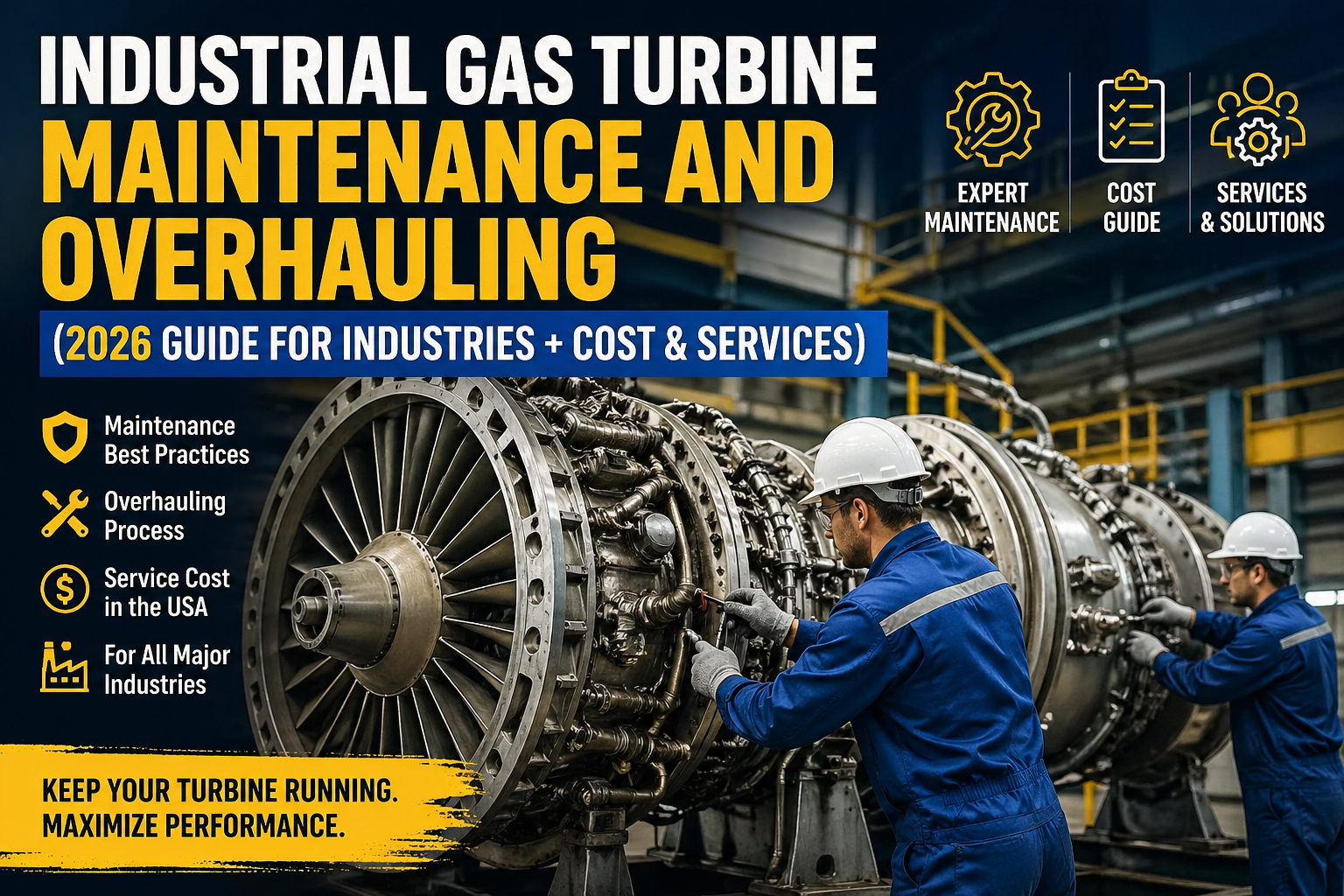
Introduction:
Industrial Gas turbines power some of the most critical operations in all over the world — from electricity generation to oil & gas processing to petrochemical plants. When they run well, everything else runs well. When they don’t, the cost of downtime is staggering.
I’ve seen firsthand what happens when a turbine misses its scheduled inspection. One unplanned shutdown at a combined-cycle power plant can cost $150,000 to $500,000 per day in lost generation revenue, not counting emergency repair costs. That’s why maintenance and overhauling aren’t optional — they’re survival.
This guide covers everything industrial buyers, plant engineers, and maintenance managers need to know: what maintenance actually looks like in the field, what overhauling costs in 2026, and how to find reliable service companies in the USA.
📘 Suggested Course: Industrial Gas Turbine and Auxiliaries in Power Plants
👉 If you want to understand gas turbine systems, auxiliaries, and real-world power plant operations in a practical way, this course is highly recommended.
👉 Learn complete power plant concepts here: [https://trk.udemy.com/1GWGG6]
What Is an Industrial Gas Turbine?
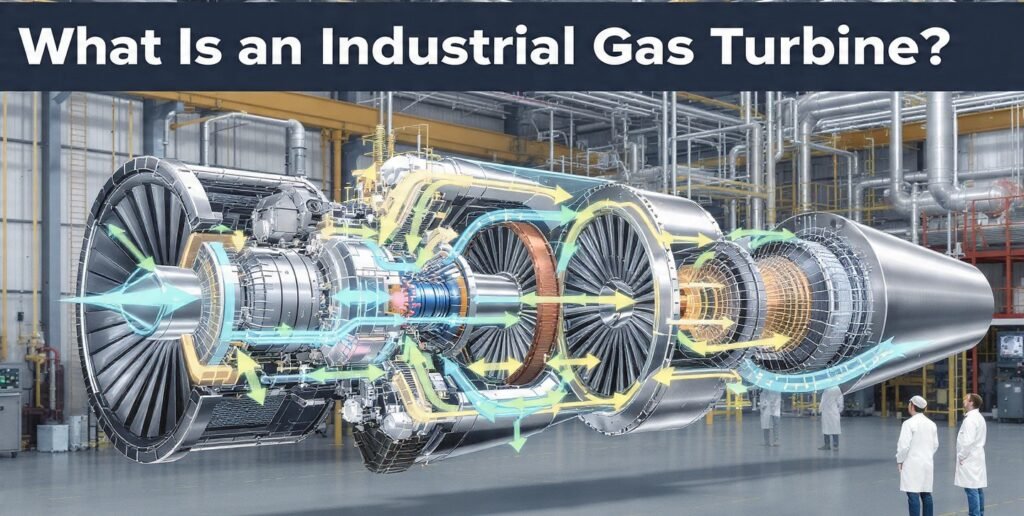
An industrial gas turbine is a rotating engine that converts fuel — natural gas, diesel, or other fuels — into mechanical energy. That energy drives a generator, compressor, or pump.
The basic process is: air enters the compressor, gets compressed, mixes with fuel, ignites in the combustion chamber, and the hot exhaust gases spin the turbine blades. Simple in concept, complex in execution.
Common Applications in USA Industries:
- Power generation (utility and distributed energy)
- Oil and gas pipeline compression
- LNG and petrochemical processing
- Manufacturing plant cogeneration (CHP systems)
- Aircraft ground support and marine propulsion
The most common industrial gas turbine manufacturers in the USA market include GE, Siemens Energy, Solar Turbines (Caterpillar), MAN Energy Solutions, and Ansaldo Energia. Each has its own OEM service standards and spare parts ecosystem.
Why Maintenance Is Non-Negotiable:
In real plant conditions, industrial gas turbines degrade continuously. Hot section components — blades, vanes, combustion liners — operate at temperatures exceeding 2,500°F. Even with thermal coatings, wear is inevitable.
The Real Cost of Neglecting Maintenance:
- Gas turbine efficiency drops 1–3% annually without proper maintenance, costing hundreds of thousands in extra fuel
- Blade erosion and fouling reduce output capacity — sometimes by 10–15%
- Unplanned failures during peak demand can trigger contractual penalties for power generators
- Insurance premiums increase when maintenance logs are incomplete
From field experience, the plants that skip preventive maintenance to save $50,000 often end up paying $1,000,000 or more in corrective repairs within 12 to 18 months. The math simply doesn’t work in their favor.
📘 Suggested Course: Industrial Gas Turbine and Steam Turbine Course
👉 If you want to understand turbine working principles, operation, and real-world power plant applications in depth, this course is highly recommended.
👉 Learn from industry-focused training here: [https://trk.udemy.com/bkmk7m]
Types of Industrial Gas Turbine Maintenance:
1. Preventive Maintenance:
- Scheduled, time-based tasks performed regardless of the turbine’s apparent condition. Think of it as routine servicing — oil changes, filter replacements, alignment checks, and minor inspections.
- Typical intervals: every 4,000 to 8,000 operating hours depending on OEM recommendations and fuel type.
2. Predictive Maintenance:
- Data-driven maintenance using real-time monitoring — vibration analysis, thermography, oil analysis, and performance trending. This is where modern plants are moving, using IIoT sensors and digital twin technology.
- Predictive programs can reduce maintenance costs by 20–30% while improving reliability. If your plant hasn’t adopted vibration monitoring at minimum, you’re operating blind.
3. Corrective Maintenance:
- Repairs made after a failure or unexpected performance drop. This is the most expensive type — not just in parts and labor, but in lost production.
- Good preventive and predictive programs significantly reduce the frequency and severity of corrective maintenance needs.
Industrial Gas Turbine Maintenance Checklist:
Based on OEM guidelines and real plant practice, here is a practical checklist for routine maintenance shutdowns:
Daily / Weekly Checks:
- Review operating data logs — temperatures, pressures, vibration readings
- Inspect inlet air filter differential pressure
- Check lube oil level, temperature, and pressure
- Confirm fuel system pressures and flow readings
- Visual check of exhaust stack for unusual color or emissions
Monthly Checks:
- Inspect and clean gas turbine air filters
- Borescope inspection of combustion liners if accessible
- Check fuel nozzle spray patterns
- Inspect cooling system for leaks and fouling
- Vibration trend review and bearing temperature analysis
Annual Shutdown Inspection:
- Full borescope inspection of compressor, combustor, and turbine sections
- Hot gas path component condition assessment
- Alignment check of couplings and driven equipment
- Control system calibration and actuator testing
- Inlet air cooling system inspection (if equipped)
📘 Suggested Course: Complete Industrial Gas Turbine & Aircraft Propulsion Engineering
👉 If you want to understand how gas turbines work in both industrial and aviation applications, this course gives you a clear, practical foundation from basics to advanced concepts.
👉 Learn gas turbine principles and propulsion systems here: [https://trk.udemy.com/NG6GNP]
Industrial Gas Turbine Overhauling Process: Step by Step:
A major overhaul is a full disassembly, inspection, repair, and reassembly of the turbine. In the USA, major overhauls are typically performed every 48,000 to 100,000 equivalent operating hours (EOH).
Step 1: Controlled Shutdown & Preservation:
- The turbine is brought to a controlled stop following OEM procedures. Fuel systems are isolated, cooled down, and the unit is locked out/tagged out (LOTO) per OSHA standards.
Step 2: Pre-Outage Inspection:
- Before disassembly, technicians perform a full borescope inspection to document existing conditions — blade erosion, coating loss, hot spots. This creates a baseline for scope-of-work planning.
Step 3: Disassembly:
- The turbine is stripped down methodically. Inlet ducting, combustion section, hot gas path components, and rotor are removed in sequence. All parts are tagged and documented — part number, position, condition.
- During maintenance shutdowns, I always stress proper documentation at this stage. Missing a part’s original position can create balancing or sealing issues during reassembly.
Step 4: Component Inspection & Repair:
- Each component undergoes non-destructive testing (NDT) — fluorescent penetrant inspection (FPI), magnetic particle testing, and dimensional checks. Blades and vanes are evaluated against OEM limits.
- Damaged gas turbine parts are either repaired (using HVOF thermal spray or TIG welding), recoated, or replaced with new OEM or approved aftermarket parts.
Step 5: Reassembly & Quality Checks:
- Components are reassembled following OEM torque specs and clearance requirements. Rotor balancing is performed. Combustion systems are set up per manufacturer specifications.
Step 6: Testing & Commissioning:
- The turbine is started under controlled conditions. Initial runs verify vibration levels, temperatures, pressures, and output performance. A full load test is done before returning to commercial service.
📘 Suggested Course: Industrial Gas Turbine Blade Design with SolidWorks – 5 Projects Based
👉 If you want to understand real-world gas turbine blade design and improve your CAD skills with hands-on projects, this course is highly recommended.
👉 Learn practical design techniques here: [https://trk.udemy.com/rE2Egd]
Common Problems in Industrial Gas Turbines:
1). Turbine Blade Damage:
- Hot section blades are the most stressed components. Erosion from particulate matter (common in desert or coastal environments), oxidation, and thermal fatigue are the leading causes of blade damage. Gas turbine air filter performance is directly linked to blade life — a compromised filter can cost you $200,000 in blades.
2). Overheating:
- Combustion liner burnout or hot streaks from uneven fuel distribution cause localized overheating. Early detection with thermocouple monitoring or exhaust temperature spread analysis prevents catastrophic failure.
3). Excessive Vibration:
- Vibration above OEM alarm limits indicates rotor imbalance, bearing wear, or structural looseness. Left unchecked, it causes rapid bearing failure and can damage casing and piping.
4). Fuel System Issues:
- Clogged or worn fuel nozzles cause poor atomization, uneven combustion, and increased emissions. Regular cleaning and flow testing of fuel nozzles is part of any serious maintenance program.
5). Compressor Fouling:
- Airborne contaminants deposit on compressor blades, reducing efficiency and flow capacity. Inlet air cooling systems must include proper filtration. Regular offline water washing restores 1–3% efficiency loss.
📘 Suggested Course: Power Generation – Complete Guide to Power Plants & Industrial Gas Turbines
👉 If you want to understand how power plants, turbines, and energy systems work in real industrial environments, this course is highly recommended.
👉 Learn power generation concepts & practical insights here: [https://trk.udemy.com/GbZbD6]
Cost of Industrial Gas Turbine Maintenance in the USA (2026):
This is the question every plant manager asks first. The honest answer: costs vary widely depending on turbine size, age, OEM, service provider, and scope. Here are realistic ranges from current market data:
| Service Type | Estimated Cost (USD) | Frequency |
| Routine Inspection | $5,000 – $25,000 | Every 4,000–8,000 hours |
| Hot Section Inspection | $100,000 – $300,000 | Every 20,000–24,000 hours |
| Major Overhaul | $500,000 – $2,000,000+ | Every 48,000–100,000 hours |
| Blade Replacement | $50,000 – $500,000 | As needed |
| Annual Maintenance Contract (AMC) | $80,000 – $400,000/year | Annual |
Factors That Affect Pricing:
- Turbine size and output class (5 MW vs. 50 MW vs. 200 MW)
- OEM vs. independent service provider (OEMs typically cost 20–40% more)
- Scope of repairs needed — coating restoration adds cost, blade replacement is the biggest variable
- Mobilization and travel costs for remote site locations
- Lead time for parts — long lead times on gas turbine parts can push costs up 15–25%
Annual Maintenance Contracts (AMC):
Many USA plants use Annual Maintenance Contracts with service companies for budget predictability. An AMC typically covers scheduled inspections, labor, and basic consumables. Parts above a defined scope trigger additional costs. When evaluating an AMC, review response time guarantees, parts availability commitments, and penalty clauses for unplanned downtime caused by contractor error. These details matter enormously when you’re in an emergency.
📘 Suggested Course: Oil & Gas Engineering – Piping, Vessels, Hydrogen & Control
👉 If you want to understand piping systems, pressure vessels, hydrogen processes, and industrial control systems in a practical way, this course is highly recommended.
👉 Explore this complete Oil & Gas Engineering course: [https://trk.udemy.com/2RWRjM]
Industrial Gas Turbine Services in the USA:
Types of Service Providers:
There are three categories of service providers in the USA market:
- OEM Service Centers — GE, Siemens, Solar Turbines: Highest cost, but have proprietary tooling, original parts, and engineering support
- Authorized Independent Service Providers (ISPs): Companies like Wood Group, AGT Industrial, PSM (Power Systems Mfg): Often 20–30% less than OEMs with comparable quality
- Regional Maintenance Companies: Smaller firms that handle routine inspections, filter changes, and minor repairs at lower rates
What to Check Before Hiring a Service Company:
- Certifications and OEM authorizations for your specific turbine model
- Field service track record — ask for references from similar turbine types
- Parts sourcing — do they use OEM-approved parts or uncertified aftermarket?
- Emergency response capability — what is their guaranteed response time?
- Insurance and liability coverage for on-site work
- OSHA compliance and HSE record
Request a detailed scope of work before signing any service contract. Vague contracts lead to disputes during execution — especially when unexpected damage is found during disassembly.
📘 Suggested Course: Process Control & Instrumentation 16 Hour Masterclass
👉 If you want to clearly understand process control concepts, instrumentation systems, and real industrial applications, this course is highly recommended.
👉 Learn practical control techniques here: [https://trk.udemy.com/DWkWQG]
Tips to Improve Gas Turbine Efficiency:
These are practical actions that make a measurable difference — not theoretical concepts.
1. Optimize Inlet Air Cooling:
- Inlet air cooling improves gas turbine output by 10–20% during hot weather — critical for summer peak demand in states like Texas, Arizona, and California. Evaporative coolers are lower cost; chiller-based systems deliver higher performance. Either way, keeping inlet temperature low is one of the highest-ROI investments available.
2. Maintain Clean Air Filters:
- A clogged gas turbine air filter increases pressure drop across the inlet, reducing mass flow and output. Replace or clean filters on schedule. In high-dust environments, consider pulse-jet self-cleaning filter systems.
3. Perform Regular Online Water Washing:
- Online compressor washing while the turbine is running removes soluble deposits without shutdown. Do it weekly or biweekly in dusty or coastal environments.
4. Monitor and Trend Data Continuously:
- Use your DCS or plant historian to track exhaust temperature spread, compressor discharge pressure, and heat rate. Early deviation detection saves millions — a 2% heat rate degradation on a 100 MW turbine costs approximately $200,000/year in extra fuel.
5. Calibrate Fuel Control Systems:
- An out-of-calibration fuel control valve or IGV actuator can cost you efficiency you don’t even know you’re losing. Annual calibration is standard practice in well-run plants.
When to Hire Professional Turbine Repair Companies:
Not every issue requires calling in a specialized repair company. But some situations absolutely do:
- Vibration levels exceed OEM alarm thresholds and trend is worsening
- Borescope reveals hot section coating loss or blade cracking
- Forced outage with unknown root cause
- Approaching scheduled major overhaul interval (start planning 12 months ahead)
- Performance degradation beyond what water washing can recover
- Fuel system issues causing emissions limit violations
For major overhauls, start the procurement process 12 to 18 months in advance. Long-lead gas turbine parts — especially first-stage blades and combustion liners — can have 6 to 12 month delivery times in the current market.
Don’t wait until you’re 90 days from your planned outage to call a service company. The best service providers have slots booked 6 to 12 months out.
Conclusion:
Industrial gas turbine maintenance is not a cost center — it’s an investment in reliability, efficiency, and business continuity. The plants that treat it as such consistently outperform those that don’t.
Whether you’re budgeting for a routine inspection, planning a major overhaul, or evaluating Annual Maintenance Contracts in the USA, the principles are the same: follow OEM recommendations, document everything, and hire service companies with proven track records.
In 2026, with energy margins tight and grid reliability demands high, the last thing any plant can afford is an unplanned turbine outage. Plan ahead, maintain consistently, and your industrial gas turbine will deliver the performance and uptime your operation depends on.