Introduction: Why HVAC Maintenance Is a Big Deal for Homeowners:
If you’ve ever opened an electric bill in July and nearly fallen off your chair, you already know how much your HVAC system affects your life. Heating and cooling accounts for roughly 48% of the total energy used in a typical American home, according to the U.S. Department of Energy. That’s nearly half your bill — and a poorly maintained system makes that number climb higher every year.
I’ve been servicing HVAC systems across the country for over 15 years, from humid Houston summers to frigid Minnesota winters. Here’s what I’ve seen over and over again: homeowners who skip routine hvac maintenance end up spending three to four times more in repairs down the road. Not to mention they’re breathing dustier air, dealing with uneven temperatures room to room, and replacing equipment years earlier than necessary.
This guide covers everything you need to know about inspecting, cleaning, and optimizing your system — whether you handle some tasks yourself or hire a professional. Let’s get into it.
📘 Suggested Course: HVAC Maintenance from Zero to Hero (DUAL HVAC Certification)
👉 If you’re starting your HVAC journey or want to upgrade your maintenance skills from basics to advanced level, this course is a solid choice.
👉 Learn complete HVAC maintenance step-by-step: [https://trk.udemy.com/bkDoEv]
Why Regular HVAC Maintenance Matters:
Some homeowners treat their HVAC like their car’s spare tire — out of sight, out of mind, until something goes wrong. But just like a car needs oil changes, your heating and cooling system needs consistent attention to keep running efficiently.
1). Lower Energy Bills:
- A dirty or poorly tuned system has to work much harder to maintain your set temperature. According to ENERGY STAR, regular hvac maintenance can cut energy bills by 5% to 15%. On a $300/month summer cooling bill, that’s $15–$45 back in your pocket every single month.
2). Better Indoor Air Quality:
- Your system moves the same air around your home all day long. If the filter is clogged, the coils are grimy, or there’s mold growing in the drain pan, that air carries those pollutants with it. Families with allergies or asthma notice this fast. Clean systems mean cleaner air — full stop.
3). Fewer Surprise Breakdowns:
- Nothing is worse than your AC dying at 5 PM on a 95-degree Saturday. Routine inspections catch small problems — a worn capacitor, a refrigerant leak, a cracked heat exchanger — before they become expensive emergencies. Emergency service calls typically cost 1.5x to 2x normal rates.
4). Longer System Lifespan:
- The average central air system costs $5,000–$12,500 to replace. A maintenance plan costing $150–$300 per year can add years to that lifespan. It’s simple math that most homeowners don’t think about until they’re writing a big check.
📘 Suggested Course: Become an HVAC PRO – The Ultimate HVAC Guide
👉 If you want to master HVAC systems, troubleshooting, and real-world maintenance techniques, this course is highly recommended.
👉 Start learning here: [https://trk.udemy.com/yZe173]
HVAC Inspection Checklist (Step-by-Step):
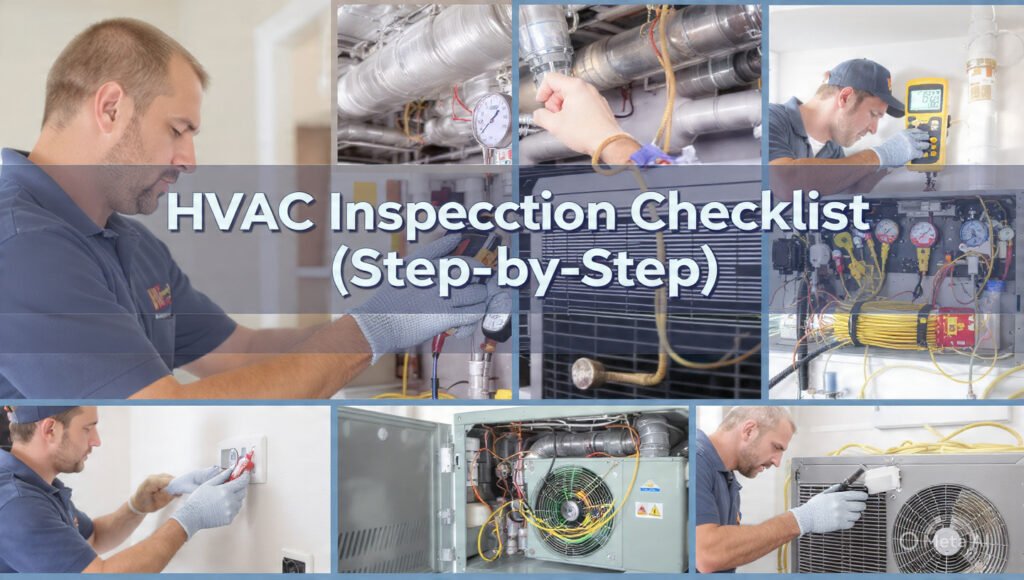
A proper hvac inspection should happen at least twice a year — once before cooling season (spring) and once before heating season (fall). Here’s what a thorough inspection looks like, whether you’re doing part of it yourself or watching a technician work:
1). Thermostat Check:
- Verify the thermostat is reading the correct temperature and responding to setting changes. If you have an old mercury thermostat, now is a great time to upgrade to a smart thermostat — more on that in the optimization section. Check that the programming makes sense for your schedule.
2). Electrical Connections:
- Loose or corroded connections cause inefficiency and are a fire hazard. A technician will tighten terminals and measure voltage and amperage on motors. Never do this yourself without proper training — 240V systems can kill.
3). Refrigerant Levels:
- Low refrigerant (often called Freon, though most modern systems use R-410A or R-32) means your AC can’t cool effectively. It also strains the compressor. Refrigerant doesn’t “run out” — if it’s low, there’s a leak that must be found and repaired first.
4). Ductwork Inspection:
- Leaky ducts can account for 20–30% of energy loss. Look for disconnected sections, visible holes, or areas with poor insulation. In older homes, this is a major source of inefficiency that often goes undetected for years.
5). Airflow Check:
- Walk through your home and check that air is blowing evenly from all vents. Weak flow from certain registers points to blockages, closed dampers, or duct problems. Proper airflow is essential for hvac efficiency.
6). Condensate Drain Line:
- The drain line removes moisture pulled from indoor air. It clogs easily with algae and debris, especially in humid climates. A clogged drain causes water damage and mold — check it every inspection.
7). Belts and Bearings:
- Older air handlers use belt-driven blowers. Worn belts squeal and eventually snap. Lubricate motor bearings annually where applicable — it extends motor life significantly.
Pro Tip:
Take photos during your inspection every year. Comparing photos from one year to the next helps you spot gradual changes — like buildup on coils or corrosion on connections — before they become problems.
📘 Suggested Course: HVAC Fundamentals and BMS Controls
👉 If you want to understand HVAC systems and building management controls with practical, real-world applications, this course is highly recommended.
👉 Learn HVAC & BMS concepts step-by-step: [https://trk.udemy.com/7XGNZg]
HVAC Cleaning Procedures: Air Conditioner Maintenance Done Right:
Cleaning is the hands-on side of air conditioner maintenance, and it’s where most of the real efficiency gains come from. Here’s how to approach each major component:
1). Air Filter Replacement:
- This is the single most important thing you can do. A dirty filter restricts airflow, forcing your system to work harder. In most US homes, filters should be changed every 1–3 months — more often if you have pets, live in a dusty area, or have anyone with allergies in the household.
- I once visited a home in Phoenix where the filter hadn’t been changed in 14 months. The evaporator coil was completely iced over and the homeowner couldn’t figure out why the house wasn’t cooling. Thirty dollars in filters per year versus a $400 service call. Change your filters.
- Use MERV 8–13 filters for most homes. Higher MERV ratings trap more particles but restrict airflow more — don’t go beyond MERV 13 without checking your system’s specifications first.
2). Evaporator Coil Cleaning:
- The evaporator coil sits inside the air handler and absorbs heat from your indoor air. Over time, dust builds up on it even with regular filter changes. A dirty coil reduces heat transfer efficiency significantly. Cleaning it requires removing the access panel and using a coil-safe cleaner — usually done once a year by a technician.
3). Condenser Coil Cleaning:
- The condenser coil is in the outdoor unit. Grass clippings, cottonwood seeds, dirt, and leaves accumulate on the fins and block airflow. Once a year in spring, turn off the power to the unit at the disconnect box, remove the top panel, and gently rinse the coils from inside out with a garden hose. Never use a pressure washer — it bends the delicate aluminum fins.
DIY-Friendly Tip:
Keep at least 18–24 inches of clearance around your outdoor unit at all times. Trim back bushes, clear away debris, and don’t stack anything against it. Good airflow in = good efficiency out.
4). Drain Line Cleaning:
- Every 6 months, pour a cup of distilled white vinegar down the condensate drain line. It kills algae before it can form a clog. Some homeowners also use a wet/dry vac to suction the line from the outdoor drain end. It takes five minutes and can save you from a flooded utility closet.
5). Outdoor Unit Cleaning:
- Beyond the coils, straighten any bent fins with a fin comb, check that the unit is level (it can settle over time), and make sure the drain holes at the base aren’t blocked. In fall, clear fallen leaves from around the unit regularly.
📘 Suggested Course: HVAC (PART 1) with HAP | Excel | AutoCAD | Manual Calculations
👉 If you want to understand HVAC system design from basics to practical calculations using industry tools like HAP, Excel, and AutoCAD, this course is highly recommended.
👉 Learn step-by-step HVAC design here: [https://trk.udemy.com/DWbN22]
Optimization Techniques to Maximize HVAC Efficiency:
Cleaning and inspecting keeps your system healthy. Optimization makes it perform at its best for your specific home. These are the techniques I recommend to homeowners who want to push their system’s hvac efficiency to the next level.
1). Thermostat Calibration and Smart Thermostats:
- An uncalibrated thermostat can be off by 2–5 degrees, causing your system to over-run or under-run. Test your thermostat’s accuracy by taping a quality thermometer next to it for 15 minutes — if there’s more than a 1-degree gap, recalibrate or replace it.
- If you’re still using an old programmable thermostat, a smart thermostat upgrade is one of the best investments you can make. The Ecobee, Nest, and Honeywell Home T9 models can learn your schedule, adjust based on occupancy sensors, and give you remote control. The U.S. EPA estimates smart thermostats save homeowners an average of $50–$150 per year on energy costs.
2). Airflow Balancing:
- Is your bedroom too cold while the living room stays warm? Your system is out of balance. Partially closing supply registers in rooms that overcool pushes more air to rooms that need it. Some homes benefit from a professional airflow balancing service, which uses measuring tools to optimize how air is distributed through the duct system.
3). Sealing Ductwork:
- The Department of Energy estimates that 20–30% of the air moving through duct systems is lost to leaks in typical homes. Sealing ducts with mastic sealant (not standard duct tape, which fails over time) or metal foil tape is one of the highest-ROI improvements you can make to your home’s energy performance.
4). Improving Insulation:
- Your HVAC system can only do so much if your home is a leaky box. Adequate attic insulation (R-38 to R-60 depending on your climate zone), weather-stripping on doors, and caulking around windows all reduce the load on your system. Less load means smaller energy bills and a longer system lifespan.
Quick Win:
- Use ceiling fans during summer (counterclockwise rotation) to feel 4–6 degrees cooler. You can set your thermostat higher and save 10–15% on cooling costs without sacrificing comfort.
📘 Suggested Course: HVAC Design Course Fundamentals, All Steps & Actual Projects
👉 If you want to learn HVAC design step-by-step with real project examples, this course is highly recommended.
👉 Check the complete course here: [https://trk.udemy.com/jRnLvP]
Seasonal HVAC Maintenance Tips for US Homeowners:
The US has some of the most varied climates in the world — from desert heat to lake-effect snow. Here’s how to prepare your system for each major season:
☀️ Summer Prep (AC Season):
- Schedule AC tune-up in March–April before peak demand
- Replace air filter before cooling season starts
- Clean condenser coils and clear debris from outdoor unit
- Test thermostat cooling mode
- Check and clear the condensate drain line
- Inspect insulation on refrigerant lines (look for worn or missing foam)
- Verify all vents are open and unobstructed
❄️ Winter Prep (Heating Season):
- Schedule furnace tune-up in September–October
- Replace filter before heating season
- Test heating mode on thermostat before first cold night
- Inspect heat exchanger for cracks (requires a tech — CO risk)
- Check flue pipes for blockages or damage
- Test carbon monoxide detectors on every floor
- Clear snow and ice from outdoor heat pump units
Safety Note:
- A cracked heat exchanger on a gas furnace can leak carbon monoxide into your home — a colorless, odorless gas that kills. Never skip the annual furnace inspection. This is one area where DIY has real limits.
📘 Suggested Course: Revit MEP (Design Services) – HVAC Design (HAP & ASHRAE)
👉 If you want to design HVAC systems using real industry standards like HAP and ASHRAE, this course will help you build practical skills in load calculation, duct design, and Revit MEP workflows.
👉 Learn professional HVAC design here: [https://trk.udemy.com/enrW6O]
Common HVAC Mistakes Homeowners Make:
After years of service calls, I can tell you the same mistakes come up again and again. Here are the big ones to avoid:
🚫Skipping Filter Changes: The most common — and most expensive — mistake. A clogged filter is the leading cause of evaporator coil freeze-ups, compressor failures, and blower motor burnout. Set a phone reminder every 6 weeks if you need help remembering.
🚫Ignoring Unusual Noises: Banging, rattling, screeching, or clicking sounds are your system trying to tell you something. A squealing belt costs $20 to replace. If you ignore it until it snaps, you could be looking at blower motor damage worth $300–$600. Don’t wait it out.
🚫Closing Vents to “Save Energy”: Closing vents in unused rooms doesn’t save money — it increases static pressure in your duct system, stresses the blower motor, and can cause premature failures. If you want to control room temperatures better, look into a zoning system instead.
🚫Setting the Thermostat Too Extreme: Cranking the AC to 65°F when you get home doesn’t cool the house faster — your system delivers the same amount of cooling regardless. It just overshoots and wastes energy. Set it where you want it and let it work.
🚫DIY Refrigerant Recharging: Those “AC Pro” cans you see at auto parts stores are not meant for home HVAC systems. Adding refrigerant without finding the leak first is like refilling a bucket with a hole in it. You’re wasting money and potentially damaging the compressor.
Conclusion:
Your HVAC system works hard every single day — cooling you through brutal summer heat, keeping your family warm through cold winters, and filtering the air you breathe around the clock. Treating it well isn’t complicated. It just takes a bit of consistency.
Change your filters regularly. Clean your outdoor unit each spring. Get a professional tune-up twice a year. Pay attention when something sounds or smells off. That’s really most of what it takes to keep an HVAC system running efficiently for 15–20 years.
The homeowners I’ve seen struggle most with HVAC costs are usually the ones who treated the system as invisible — until it stopped working. The ones who call me for preventive maintenance? They almost never have emergency breakdowns, they pay less on their energy bills, and their equipment consistently outlasts the national average.
Start with one thing today if you haven’t done it recently: check your air filter. If it’s gray and clogged, replace it. That one five-minute task might be the most cost-effective maintenance decision you make this year.